Portfolio Case Study
Reducing Ramp Time in a FinTech BPO Operation
A rapidly scaling FinTech BPO operation needed large cohorts of customer support agents to handle transactional and account-related inquiries sooner. The onboarding system was redesigned around real performance requirements, earlier practice, visible readiness milestones, and controlled production.
Training did not reflect the realities of production.
Agents needed to reach full productivity faster, but abstract training and late exposure to realistic work left them less prepared for live decisions. Time-to-proficiency stretched to 10–12 weeks, delaying floor contribution and affecting productivity, customer experience, and operating costs.
- Training was disconnected from real call types, decisions, and job complexity.
- Live scenarios and realistic practice appeared too late in the learning journey.
- No structured progression connected training readiness to production readiness.
- Readiness and QA expectations were unclear or inconsistent across Training and Operations.
Faster readiness with earlier, controlled contribution.
~80% by Weeks 5–6
- Full performance was defined by consistent QA at or above 90%, stable AHT, and reduced reliance on support.
- Training and Operations also developed a more consistent interpretation of QA standards, supporting a smoother transition into the live environment.
How the onboarding system was redesigned
The redesign started with observable job performance rather than content alone, then built a visible path from foundational learning through guided practice and controlled production.
-
01
Performance Mapping
Core call types and complexity tiers were mapped to the decisions and behaviors agents needed to demonstrate. Training and production-readiness expectations were aligned to operational performance.
-
02
Structured Learning Journey
Onboarding became a six-week progression with clearer pacing across foundations, practice, and production. Observable milestones made readiness easier to understand and measure.
-
03
Scenario-Based Practice
Realistic scenarios were introduced earlier so agents could practice live-job decisions and connect knowledge to execution before carrying full production responsibility.
-
04
QA / Readiness Progression
A progressive QA glidepath made quality targets visible at each readiness stage and clarified the move from supported learning to production accountability.
-
05
Controlled Production / Nesting
Controlled nesting introduced live interactions in Week 2. Progressive exposure helped agents build confidence while keeping training support and operational expectations aligned.
Evidence from the solution design
Open either artifact to review the full-size framework.
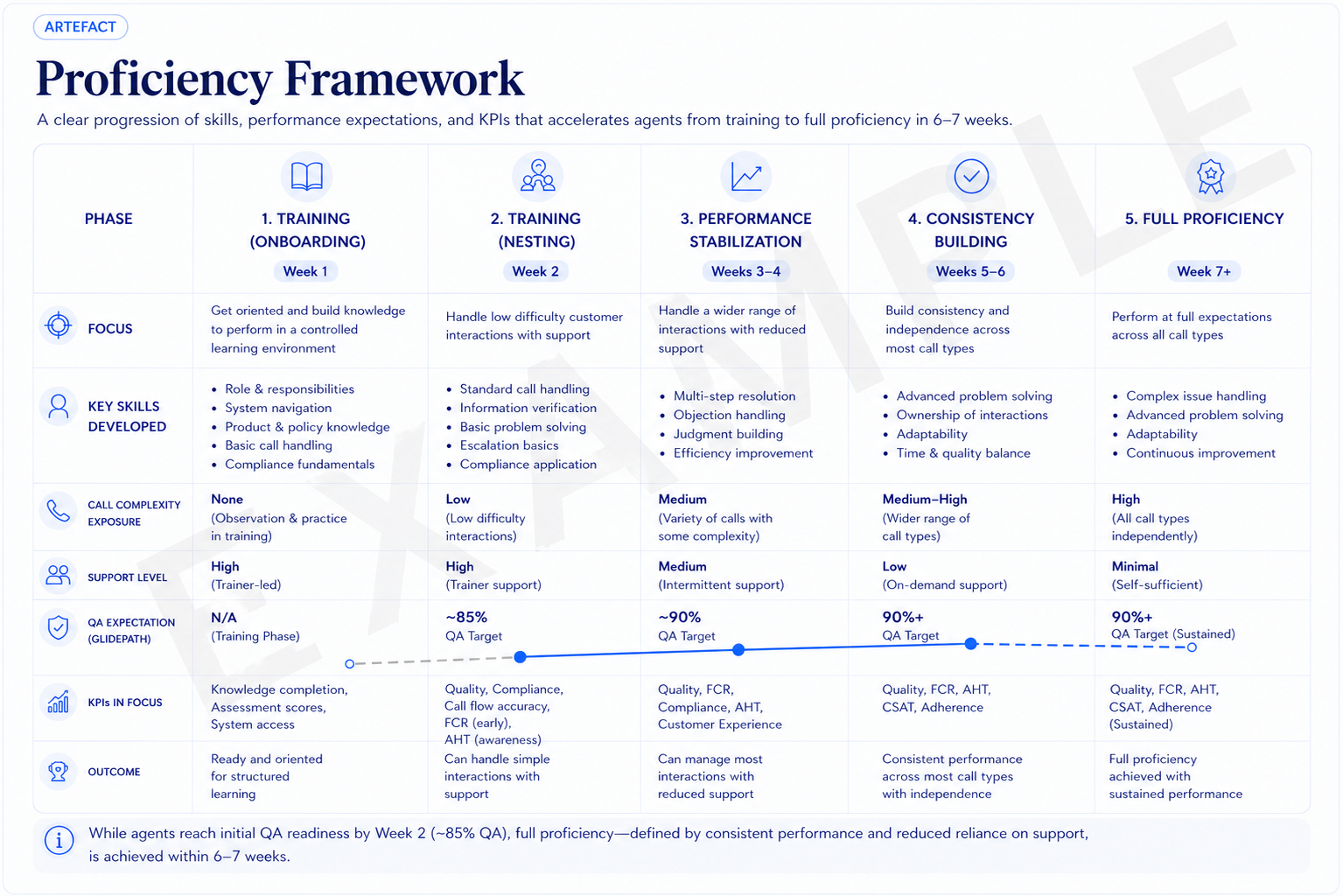
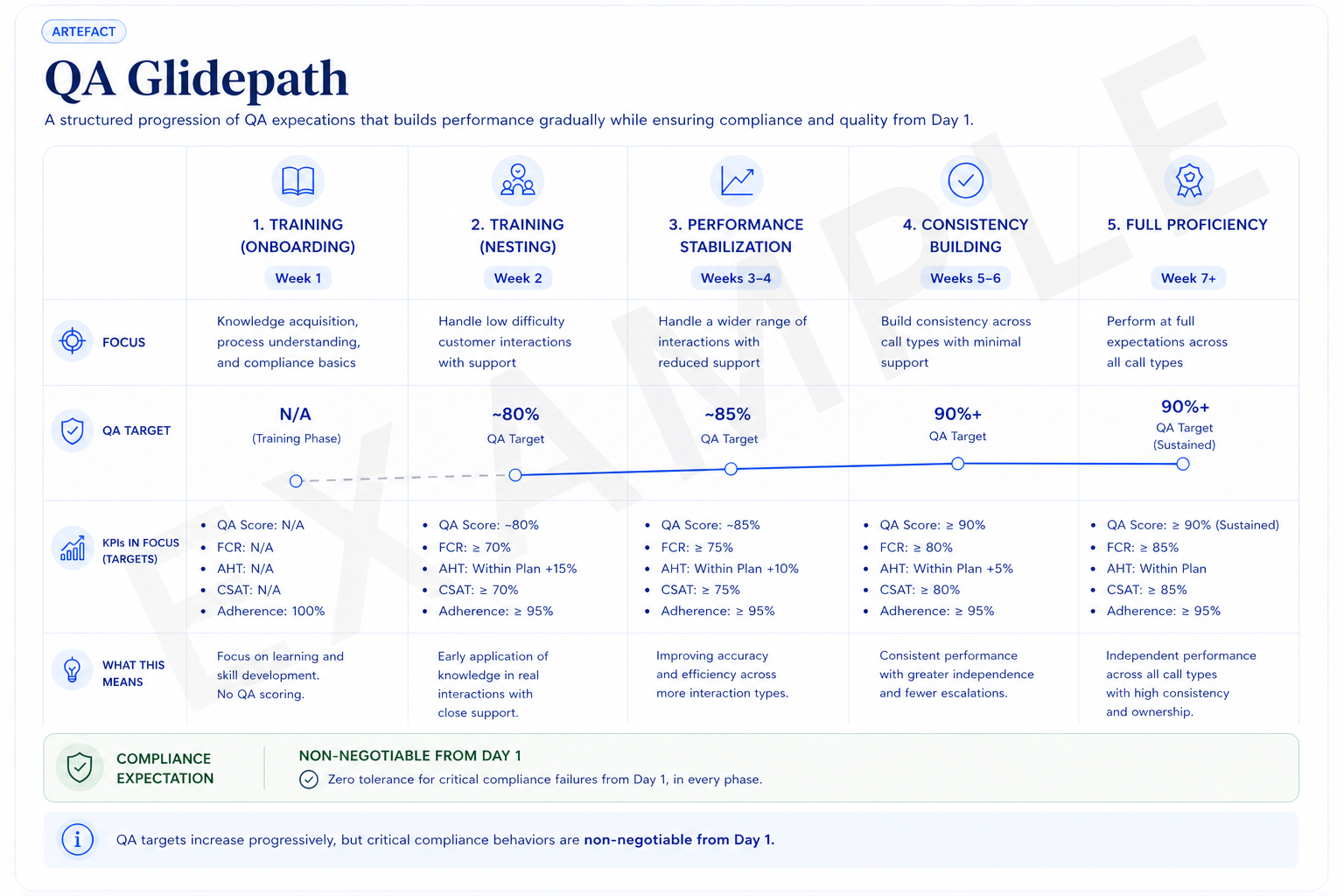
Learning design connected to operational performance.
This project demonstrates how a business and performance problem can be translated into a structured learning system. It connects training, scenario practice, QA expectations, and production readiness around proficiency rather than course completion—helping agents contribute sooner without separating learning goals from the realities of live work.
Next Step
Need something similar for your team?
Whether you need onboarding support, process documentation, digital learning, or a workshop, I can help turn complex knowledge into something clear and usable.